Showing posts with label Space. Show all posts

Thursday, February 27, 2025

ESA Science Programme Committee


At the meeting of the Science Programme Committee 

of the European Space Agency in Paris


Friday, November 22, 2024

Δρ. Αλέξης Παπαδόπουλος


Ο Αλέξης μας παρουσιάζει τη διδακτορική του διατριβή με θέμα Microdosimetric calculations at DNA level for the determination of safe radiation dose limits for crewed long-term space missions, την οποία  εκπόνησε στο Τμήμα Ιατρικής του Πανεπιστημίου Ιωαννίνων υπό την επίβλεψη του Καθηγητή Δημήτρη Εμφιετζόγλου


και ο εορτασμός με οικογένεια και φίλους


Tuesday, October 15, 2024

Global Space Leaders Summit


At the Global Space Leaders Summit organized by the International Astronautical Federation during the International Astronautical Congress 2024 in Milano, Italy


Friday, July 19, 2024

With Dimitris @ COSPAR2024


Με τον συνάδελφο, φίλο και κουμπάρο μου, Δημήτρη Βασιλειάδη στο 45ο συνέδριο της COSPAR (Committee on Space Research) στη Busan της Κορέας.

Τα συνέδρια της COSPAR έχουν μια θέση στη ζωή μου. Λίγο πριν παντρευτώ την Άννα, τον Αύγουστο του 1988, συμμετείχα στο 27ο συνέδριο της COSPAR,  Ιούλιο του 1988 στο Ελσίνκι της Φινλανδίας. Ήταν το πρώτο επιστημονικό συνέδριο στο οποίο συμμετείχα και μάλιστα με προφορική παρουσίαση. Είχα αρχίσει ένα χρόνο νωρίτερα το διδακτορικό μου στο Ινστιτούτο Max Planck της Γερμανίας

Η ελληνική σημαία ανεμίζει ανάμεσα στις σημαίες άλλων κρατών-μελών της COSPAR


Thursday, July 18, 2024

With Richard @ COSPAR2024


With my esteemed colleague and friend Richard Horne 
at the 45th Scientific Assembly of COSPAR (Committee on Space Research) in Busan, South Korea

Wednesday, May 29, 2024

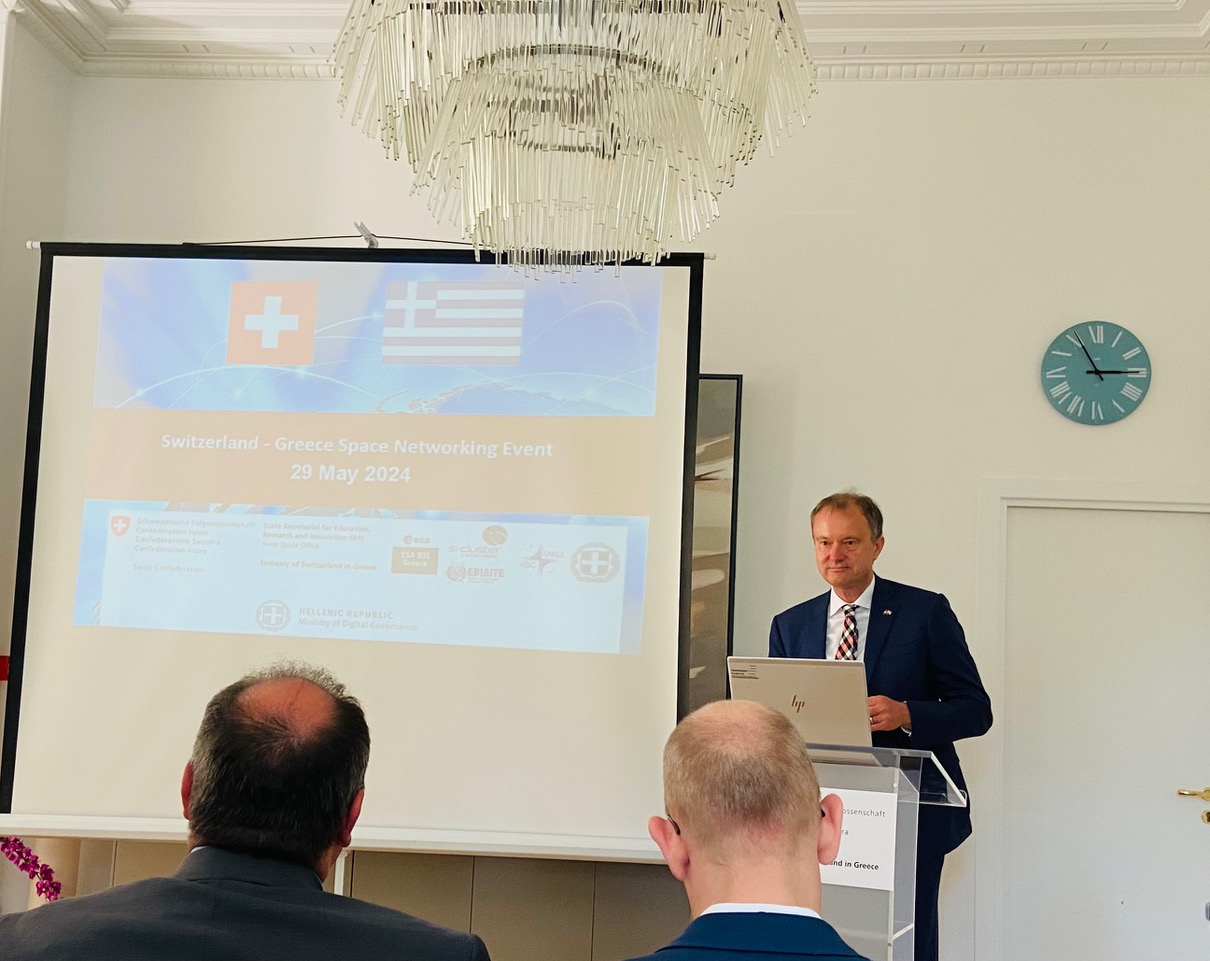
Swiss-Greek Space Networking Event


 Στιγμιότυπα από την ημερίδα ελληνοελβετικής συνεργασίας στο Διάστημα, στην κατοικία του Πρέσβη της Ελβετίας στην Αθήνα

Ο Ελβετός Πρέσβης Stefan Estermann


Δρ. Γεώργιος Κοτρώτσιος, πρώην μέλος ΔΣ του CSEM, Καθ. Κωνσταντίνος Καράντζαλος, Γενικός Γραμματέας Τηλεπικοινωνιών και Ταχυδρομείων, ο Ελβετός Πρέσβης, Δρ. Ηλίας Παπασταματίου, ΕΔΥΤΕ, Νικόλαος Δούκας, εμπορικός ακόλουθος της Ελληνικής Πρεσβείας στην Ελβετία, Ι. Δαγκλής, Πρόεδρος του Ελληνικού Κέντρου Διαστήματος 


My address:

Your Excellence, Ladies and Gentlemen,

I am very happy and deeply honored to address you today, in my capacity as the president of the Greek Space Agency.

Before presenting the activities of the HSC, let us recollect a historic moment for space and for Switzerland: the so-called Swiss flag experiment.

It is a little-known fact that the first ‘flag’ on the Moon was Swiss. The team behind Apollo 11 Solar Wind Composition Experiment was from the University of Bern in Switzerland. The flag-like Solar Wind Composition Experiment was the first experiment set up by the Apollo 11 astronauts on the lunar surface, and its Principal Investigator was Johannes Geiss, the world-leading Swiss physicist. 

The experiment was both simple and of great scientific value. It was carried on almost all lunar landing missions (except for Apollo 17), and it was the only non-American experiment to be part of the Apollo landings. It consisted of an aluminum foil sheet fixed to a pole facing the Sun.

By combining scientific arguments and diplomacy, Johannes Geiss even succeeded in convincing NASA to deploy the Swiss solar sail before unfurling the US flag, in order to maximise the foil’s exposure time.

Geiss was one of the main architects of the space science programme in Switzerland, and perhaps his most important contribution came late in his career through his creation and leadership of ISSI - the International Space Science Institute in Bern.

Which brings me to one of the two personal relations that I have with Switzerland, namely my participation in many workshops and forums that took place at ISSI in Bern. The other relation is through my eldest son, who did his PhD at EPFL Lausanne. 

Let me now move to the Hellenic Space Center – the national Greek Space Agency. 

The Hellenic Space Center operates for the public interest under the Ministry of Digital Governance. Among its responsibilities I can mention the formulation of the national space strategy, which is currently being completed, the supervision and coordination of space-related R&D activities to strengthen the national space capacity, and the forging of bilateral relations with counterpart space agencies of other countries. 

As we all know, Greece is advancing rapidly in the space sector, currently designing, constructing, and preparing to deploy its first constellation of EO satellites. The initial launches are slated for 2025, with the entire constellation of over 15 satellites expected by 2026. This initiative aims to boost Greece’s strategic autonomy and technological sovereignty in space, addressing critical governmental, societal, environmental, and climate-related needs. 

The Greek Space Agency and the Ministry of Digital Governance are spearheading the development of this advanced satellite constellation. The small satellites will feature cutting-edge payloads and high-resolution cameras for daily land and marine environment observation. Thermal payloads will detect and monitor wildfires, providing vital data to firefighting teams. 
Additionally, synthetic aperture radar satellites will offer continuous, weather-independent monitoring to safeguard borders and detect floods, while multispectral sensors will monitor water quality, map agricultural areas, track crop growth, survey urban environments, and detect illegal constructions.

The implementation of this space program is crucial for the ability of Greece to manage natural disasters and monitor environmental changes effectively, ensuring the protection of natural habitats, properties, and lives. The space program also fosters economic growth by stimulating local high-tech industries, creating jobs, retaining skilled professionals, and attracting talent. Developing advanced satellite technology will support a sustainable economic framework, integrating science and technology sectors to enhance long-term economic resilience.

Greece is committed to advancing its strategic autonomy in space, as outlined in the forthcoming Greek Space Strategy. The program supports academic teams renowned for their expertise in space sciences, contributing to global efforts in space weather forecasting and solar system exploration. Collaboration with international scientific alliances and the domestic space industry enhances Greece’s scientific capabilities, positioning the country as a valuable player in the global space community.

With strategic partnerships, clear goals, and a commitment to excellence, Greece is well-positioned to achieve major advancements in space exploration, establishing a strong presence in the international space community.

Space science and exploration are vital for several reasons. They drive technological innovation, leading to advancements that benefit various industries on Earth. Exploring space helps us understand fundamental scientific questions about the universe and our place in it. It also enhances our ability to monitor and address global challenges such as climate change, natural disasters, and resource management. Investing in space science fosters international collaboration, promotes economic growth, and inspires future generations to pursue careers in science, technology, engineering, and mathematics (STEM). Through space exploration, humanity extends its reach, seeking knowledge and opportunities that can transform our world.


Thursday, March 21, 2024

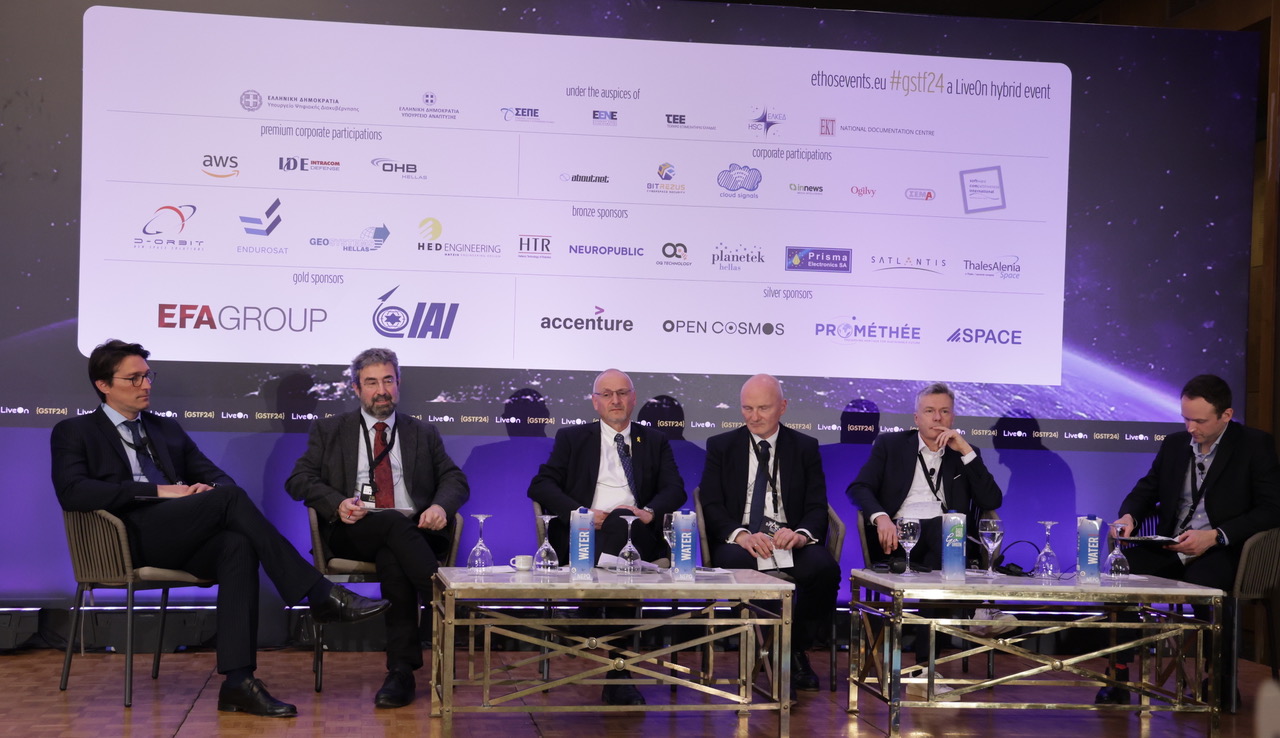
Greek Space Tech Forum


At the Panel on "The importance and benefits of international alliances in Space" of the Greek Space Tech Forum 2024, with Konstantinos Karamousalis (Diplomatic Advisor to the Minister of Digital Governance), Noam Katz (Ambassador of Israel in Greece), Andreas Kindl (Ambassador of Germany in Greece), Pierre Philippe Mathieu (Civil Security from Space Programme Implementation Manager, European Space Agency) and Dimitris Delevegos (Journalist, panel moderator). 


Friday, February 9, 2024

at the State Department


At the US Department of State (Harry Truman Building) 
for the ceremony of the accession of Greece to the Artemis Accords
with (from right to left) 
US Secretary of State Antony Blinken, 
Minister for Foreign Affairs of Greece George Gerapetritis 
and NASA Administrator Bill Nelson


Thursday, February 1, 2024

with Eytan Stibbe


Last year with Israeli astronaut Eytan Stibbe at the Ilan Ramon International Space Conference in Tel Aviv. 
Eytan recited the famous poem "Ithaca" of Constantine Cavafy just before the launch of Ax-1 space mission.

Video


Thursday, January 11, 2024

Σταμάτης Κριμιζής

 
Δημόσια Συνεδρία Εγκατάστασης του Δρ. Σταμάτη Κριμιζή ως Προέδρου της Ακαδημίας Αθηνών για το 2024 και ομιλία του για την "Εποχή του Διαστήματος"

Public Session of the Installation of Dr. Stamatis Krimizis as President of the Academy of Athens for 2024 and his speech on the "Space Age"


Tuesday, December 19, 2023

το έσχατο όριο


 Ομιλία για το έσχατο όριο της ανθρωπότητας στο περιθώριο της έκθεσης Life in Space.


Καταγραφή της ομιλίας από το Ίδρυμα Μποδοσάκη:


Monday, October 23, 2023

Παγκόσμια Εβδομάδα Διαστήματος 2023


Για έβδομη χρονιά, χωρίς διακοπή από το 2015 με την εξαίρεση των δύο ετών COVID-19, πραγματοποιήθηκε από τον Τομέα Αστροφυσικής στο Τμήμα Φυσικής του Πανεπιστημίου Αθηνών η εξαιρετικά δημοφιλής εκδήλωση για την Παγκόσμια Εβδομάδα Διαστήματος. Φέτος είχαμε κατ' εκτίμηση περίπου 700 επισκέπτες και η εκτίμηση σχετίζεται με την εξάντληση των 600 τυπωμένων προγραμμάτων, τα οποία δεν μοιράζονταν σε κάθε μέλος της οικογένειας που ερχόταν. 

Παραθέτω λίγα φωτογραφικά στιγμιότυπα και ευχαριστώ από καρδιάς όλους τους συντελεστές - τους φοιτητές μας, που χωρίς αυτούς δεν θα ήταν εφικτή η διοργάνωση, τον Σύλλογο Ερασιτεχνικής Αστρονομίας ΠερίΑστρον, και την ομάδα διάχυσης της επιστήμης SpaceGates. 

Συμμετείχαν οι εθελοντές: Κωνσταντίνος Ραφαήλ Ακάλεστος, Αθανάσιος Βασίλαινας, Μαργαρίτα Γκέγκα, Κωνσταντίνος Στυλιανός Κλέττας, Ευτύχης Κονταδάκης, Σταυρούλα Κοντογιάννη, Αλεξάνδρα Κουτρουμάνου, Παναγιώτης Μαργαριτίδης, Άγγελος Μιχαηλίδης, Όλγα Μπέλλη, Δήμητρα Μπιλάλη, Ελεάννα Μπουμπούκη, Χριστίνα Μπρίνου, Ειρήνη Νακοπούλου, Σταυρούλα Ορφανού, Θεοδώρα Πανταζή, Χριστίνα-Μαρία Παρώνη, Σεμέλη Πεϊμανίδη, Φωτεινή Στόλη, Ελευθερία Τραυλού,  Δήμητρα Τσιούτσια, Βασιλική Τσουκαλαδέλη, Αθανασία Χάρδα, Σταμάτης Χατζηπέτρος, Ευαγγελία Χριστοδούλου,

οι οργανωτές δραστηριοτήτων: Μαντώ Δημητράκουλα, Γιάννης Καλλιμάνης, Μάριος Κουζής, Σταύρος Παπατζέλος, Σταύρος Σκλαβενίτης, Ελευθερία Σωτηρίου, Αλεξάνδρα Τριαντοπούλου, Χάρης Τζερεφός, Τρύφων Φαρμακάκης, Δημήτρης Μυλωνάς, Ιάκωβος Στρίκης, Νίκος Τρεμούλης

οι συντονίστριες: Βαρβάρα Κωτσιούρου, Γεωργία Μουτσιανά, Νάντια Μουτσουρούφη, Αφροδίτη Νάση

και ο κεντρικός ομιλητής Jorge Andres Sanchez Papaspiliou.